



Complement System
The complement system, composed of more than 30 serum and cell surface components, is collaborating in recognition and elimination of pathogens as a part of both the innate and acquired immune systems. Once the complement system is activated, a chain of reactions involving proteolysis and assembly occurs, resulting in cleavage of the third complement component (C3). The cascade up to C3 cleavage is called the activation pathway. There are three activation pathways: the classical, lectin, and alternative pathways.
The complement cascade is a dual-edged sword, causing protection against bacterial and viral invasion by promoting phagocytosis and inflammation. Pathologically, complement can cause substantial damage to blood vessels (vasculitis), kidney basement membrane and attached endothelial and epithelial cells (nephritis), joint synovium (arthritis), and erythrocytes (hemolysis) if it is not adequately controlled.
All Product Categories
-
Complement System Inhibitors
(138)
View all products
-
Complement System Agonists
(13)
View all products
-
Complement System Antagonists
(21)
View all products
-
Complement System Activators
(8)
View all products
-
Complement System Modulator
(1)
View all products
-
Complement System Controls
(2)
View all products
-
Complement System Ligands
(3)
View all products
-
Complement System Proteins
(112)
View all products
-
Complement System Related Products (216)
Related Products (216)

-
Recombinant Proteins (112)
-
Antibodies (7)
-
EG01377
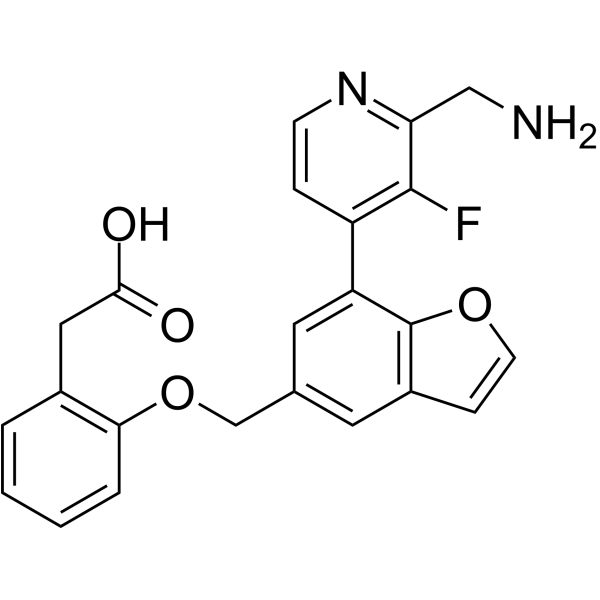
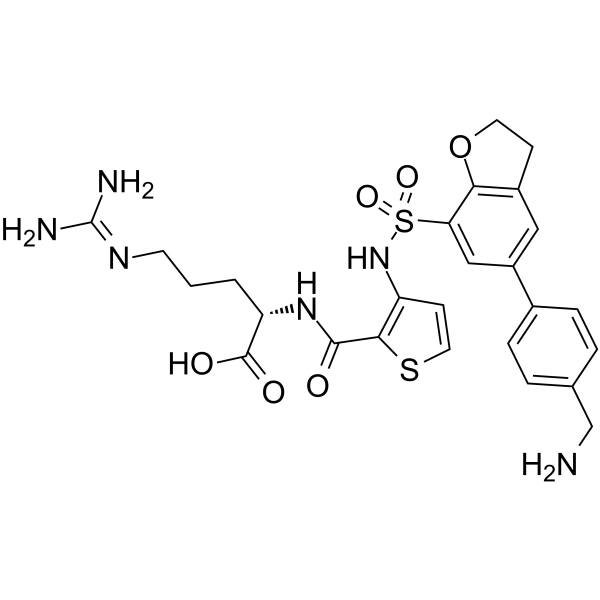 0 ImagesEG01377 is a potent, bioavailable and selective inhibitor of neuropilin-1 (NRP1), with a Kd of 1.32 μM, and IC50s of both 609 nM for NRP1-a1 and NRP1-b1. EG01377 has antiangiogenic, antimigratory, and antitumor effects.
-
Vemircopan
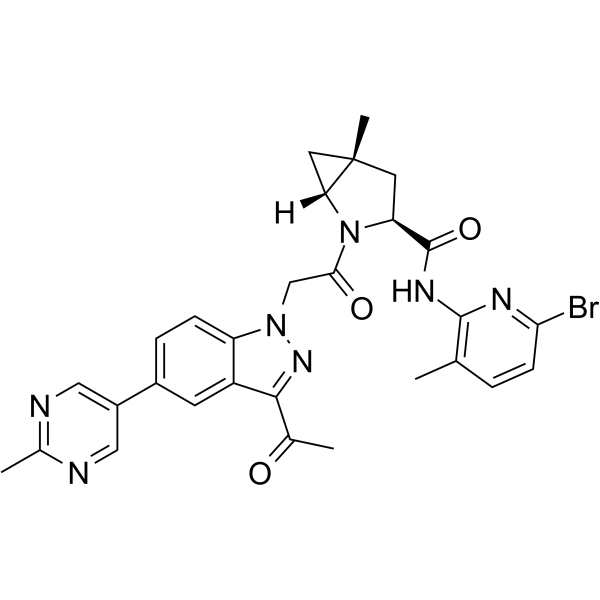 0 ImagesSynonyms: ALXN2050; ACH 0145228; ACH-5228
-
ANX-M1 (Human IgG1)
 0 ImagesCat. No.: HY-P991886Purity: ≥99.0%ANX-M1 is a blood-brain barrier-permeable anti-C1q antibody. ANX-M1 can slow down the progression of retinal degeneration following photo-oxidative damage. ANX-M1 has been incorporated into nanocarriers to evaluate its brain delivery efficacy in a mouse model of Alzheimer's disease. ANX-M1 is applicable for research on age-related macular degeneration and Alzheimer's disease [1].
-
Sefaxersen sodium
 0 ImagesSynonyms: IONIS-FB-LRx sodium; RG6299 sodium; ISIS 696844 sodiumSefaxersen sodium is a specific antisense oligonucleotide (ASO) targeting complement factor B (CFB). Sefaxersen sodium effectively reduces circulating levels of CFB, and can be used for geographic atrophy (GA) research.
-
FD-IN-1
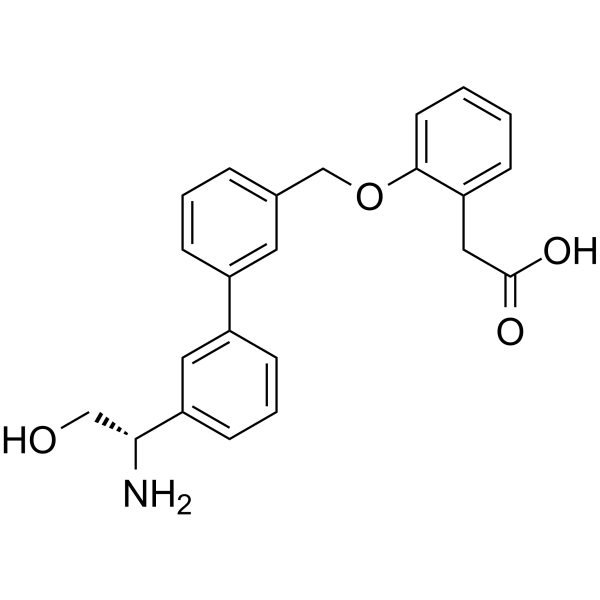 0 ImagesFD-IN-1 (Compound 12) is an orally bioavailable and selective factor D (FD) inhibitor with an IC50 of 12 nM. Complement FD, a highly specific S1 serine protease, plays a central role in the alternative complement pathway of the innate immune system. FD-IN-1 also inhibits factor XIa (FXIa) and Tryptase β2 with IC50s of 7.7 and 6.5 µM, respectively.
-
Cemdisiran
 0 ImagesSynonyms: ALN-CC5Cemdisiran (ALN-CC5) is an N-acetylgalactosamine-conjugated RNAi agent and also a complement component C5 inhibitor. Cemdisiran targets C5 mRNA, cleaves C5 mRNA via the endogenous RNA interference pathway, and inhibits the production of C5 protein in the liver. Cemdisiran exerts a dose-dependent inhibitory effect on total C5 concentrations in cynomolgus monkeys. When used in combination with Pozelimab (HY-P99786) in cynomolgus monkeys, Cemdisiran achieves a more sustained and complete inhibitory effect on complement activity. Cemdisiran can be used in the research of paroxysmal nocturnal hemoglobinuria and other complement-mediated diseases.
-
DSPE-PEG2000-iRGD
 0 ImagesCat. No.: HY-172494DSPE-PEG2000-iRGD is a PEG compound which composed of DSPE and an αv-integrins targeting peptide (iRGD). iRGD peptide binds to αv-integrins, and then proteolytically cleaved in the tumor to produce CRGDK/R to interact with neuropilin-1, and has tumor-targeting and tumor-penetrating properties. DSPE-PEG2000-iRGD can be used for agent delivery.

-
NDT 9513727
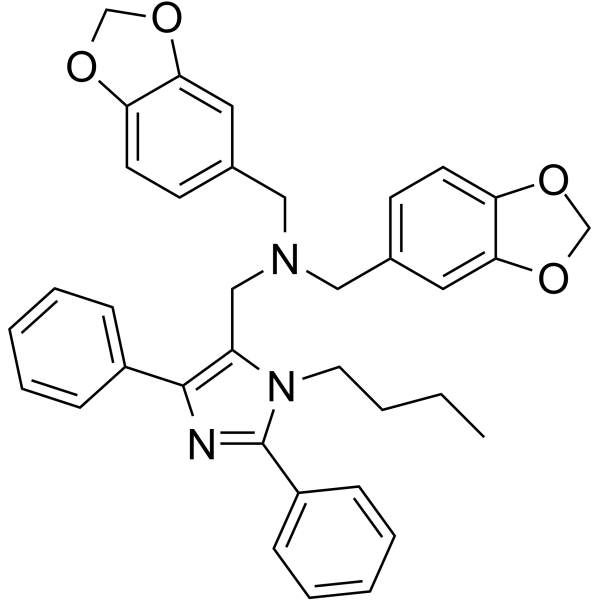 0 ImagesNDT 9513727 is a potent, selective, orally active and competitive inverse agonist of the human C5aR (C5a receptor), with an IC50 of 11.6 nM. NDT 9513727 can be used for the research of human inflammatory diseases.
-
BR103
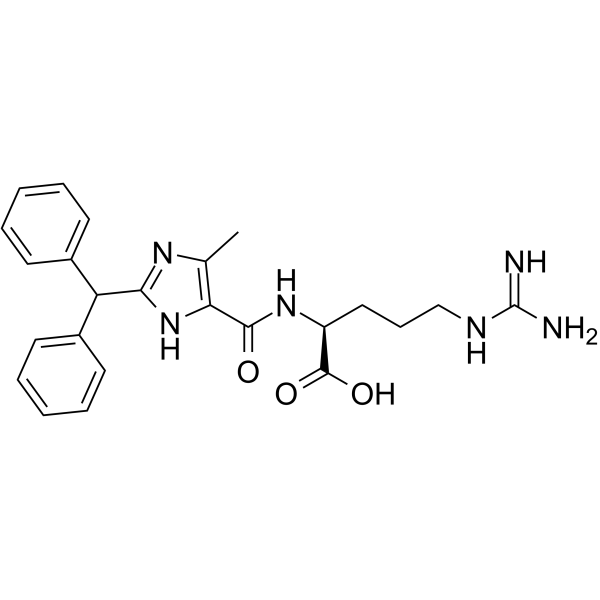 0 ImagesBR103 is a C3aR-specific small molecule ligand. BR103 can be used to measure ligand affinity for a G protein-coupled receptor for saturation and competitive binding.
-
C1s-IN-1 trihydrochloride
 0 ImagesC1s-IN-1 trihydrochloride (Compound A1) is the selective inhibitor for C1s protease with the Ki of 5.8 μM. C1s-IN-1 trihydrochloride inhibits cleavage of C2 by C1s with an IC50 of 85 μM, inhibits the activation of classic pathway with an IC50 of 22 μM. C1s-IN-1 trihydrochloride is the competitive inhibitor for thrombin with the Ki of 51.2 μM.
-
LyP-1
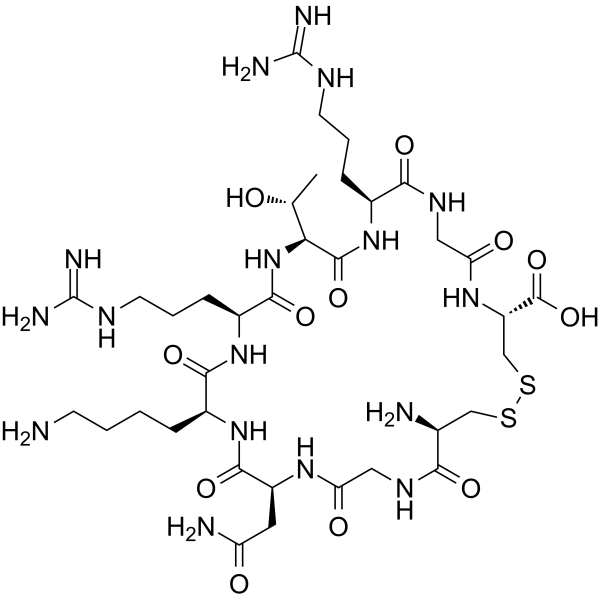 0 ImagesLyP-1 is a cyclic 9-amino-acids tumor homing peptide and selectively bind to p32 receptors overexpressed in various tumor-associated cells.
-
Dexamethasone-4,6α,21,21-d4
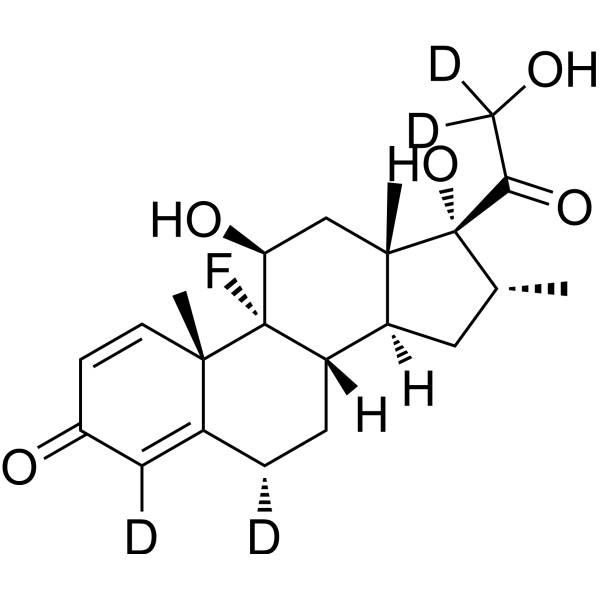 0 ImagesDexamethasone-4,6α,21,21-d4 is the deuterium labeled Dexamethasone-4,6α,21,21. Dexamethasone (Hexadecadrol) is a glucocorticoid receptor agonist. Dexamethasone also significantly decreases CD11b, CD18, and CD62L expression on neutrophils, and CD11b and CD18 expression on monocytes. Dexamethasone is highly effective in the control of COVID-19 infection. Dexamethasone inhibits production of exosomes containing inflammatory microRNA-155 in lipopolysaccharide-induced macrophage inflammatory responses.
-
C5aR2 agonist P32
 0 ImagesC5aR2 agonist P32 (Ac-RHYPYWR-OH) is a C5aR2-selective agonist. C5aR2 agonist P32 has been shown to elicit multiple immunomodulatory activities, both by down-regulating the C5aR1-mediated cell signalling, and acting in a C5aR1-independent fashion, in vitro and in vivo.
-
Dezamizumab
 0 ImagesSynonyms: GSK 2398852; Anti-Serum Amyloid P/SAP Reference Antibody (dezamizumab)Dezamizumab (GSK 2398852) is a fully humanized clonal IgG1 antibody against serum amyloid P component (SAP) with complement activation and amyloid clearance-inducing activities. Dezamizumab binds to SAP associated with amyloid deposits to form complexes that activate complement and mediate phagocytic clearance, triggering activation of the classical complement pathway. Dezamizumab can be used for the research of systemic amyloidosis.
-
Factor D inhibitor 6
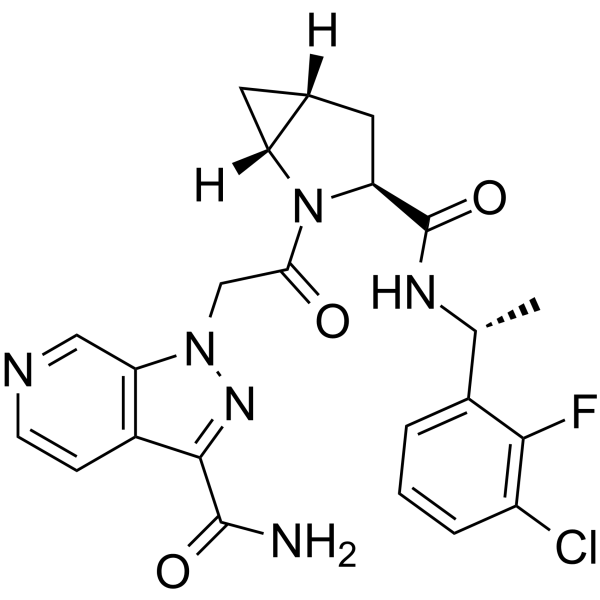 0 ImagesFactor D inhibitor 6 is a potent, highly selective and orally active factor D (FD) inhibitor with an IC50 of 30 nM and a Kd of 6 nM. Factor D inhibitor 6 is inactive against factor B, lassical and lectin complement-pathway activation, and a broad assay panel of receptors, ion channels, kinases and proteases.
-
tLyP-1 peptide
 0 ImagestLyP-1 peptide is an NRP-1 targeting peptide with an IC50 of 4 μM, and its amino acid sequence is CGNKRTR. tLyP-1 peptide specifically binds to NRP-1 to target tumor cells.




